The Hispanic and Latino Neighbors Who Help Make Orlando and Kissimmee Home
Living in Orlando or Kissimmee means having a whole world surprisingly close to home. A Colombian bakery can become part of your Saturday morning. Your children can learn about Three Kings Day from a Puerto Rican classmate, discover that their friend’s family makes tamales differently from yours, and develop very strong opinions about a soccer team their grandparents have never heard of. Over time, the places and traditions that once felt unfamiliar become part of your own life here. You start going back to the same counter. Somebody remembers your order. Eventually, you are bringing a friend.
Our Hispanic and Latino neighbors have helped create that Central Florida through decades of work, friendship and family life. They have opened businesses, taught our children, cared for patients and helped run the attractions that make this area famous. They have also given us better ways to spend an ordinary evening, whether that means hearing live music, watching a local performance or discovering that dinner is going to last considerably longer than anyone initially suggested.
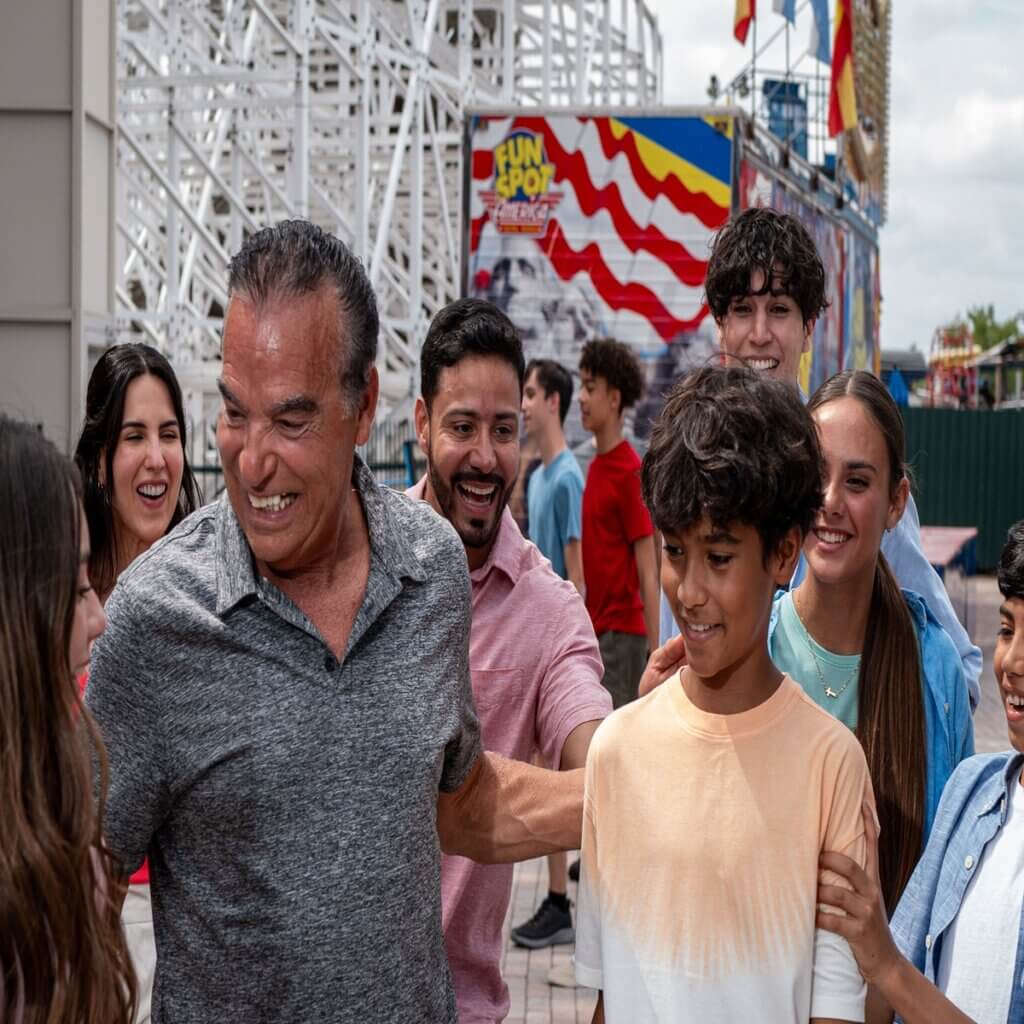
At Fun Spot America, we’re proud to be part of the diverse communities that make Orlando and Kissimmee special. Every day, families from different backgrounds come together at our parks to share experiences, celebrate milestones, and create memories. No matter what language you speak or where your family comes from, the sound of laughter is something we all share.
Generations of Hispanic and Latino Influence in Central Florida
The scale of the Hispanic community in this area can still surprise people who know Central Florida mainly through vacation brochures. The U.S. Census Bureau’s QuickFacts page for Osceola County reports that 58.2 percent of residents are Hispanic or Latino. In the City of Kissimmee, the figure is 68.8 percent. That means the community being celebrated includes most of the city’s residents. Its influence is present in the decisions, businesses and daily routines that keep Kissimmee going.
Puerto Rican families have played an especially important role in Central Florida’s growth. The University of Central Florida’s oral history project documents Puerto Rican lives in the region from the 1940s through the 1980s, including stories connected to Orlando and Kissimmee. Those histories reach well before Hurricane Maria brought renewed attention to families moving from the island. Earlier generations had already established homes and relationships that helped later arrivals find their footing.
For some families, the journey here began in San Juan, Ponce or Mayagüez. Others came through New York, New Jersey or another part of the mainland. Their children and grandchildren may have been born in Florida, with deep affection for both places. Puerto Rican identity and American identity belong comfortably in the same conversation. So do pride in the island and a very personal interest in what happens at the next Osceola County school meeting.
The wider Florida story reaches further back. In Tampa’s Ybor City, Cuban and Spanish immigrants helped build a major cigar industry alongside neighbors from other backgrounds. Mutual aid societies supported community life and helped families care for one another. Here in Central Florida, today’s business associations and cultural organizations continue the practical work of helping people build something together. The industries have changed, but the value of a neighbor who knows where to start remains easy to understand.
Many Cultures Share This Home
The words Hispanic and Latino help us talk about a large community, but they leave plenty of room for personal history. Hispanic generally refers to heritage connected to Spanish-speaking cultures. Latino generally refers to roots in Latin America. A person with family from Spain may identify as Hispanic; a Brazilian neighbor may identify as Latino while speaking Portuguese. Many people prefer Puerto Rican, Dominican, Colombian, Mexican American or another description that says more about their particular family. The Smithsonian’s National Museum of the American Latino explores these overlapping identities, which rarely fit neatly into a single box.
There are differences within every country, too. Coastal and mountain communities can have different foods, accents and histories. Afro-Latino families carry traditions shaped by African ancestry, while Indigenous communities preserve languages and knowledge that long predate Spanish colonization. Asian Latin American families are part of this story as well. Speaking Spanish is one possible connection among neighbors, and nobody needs to pass a language test to belong to their own heritage.
That variety makes local life better in ways that are both enjoyable and useful. A child grows up learning that a familiar word can sound different in another household. A business owner finds someone who understands a market abroad. Friends discover that the dish they thought they knew has another version worth trying. There is a great deal to learn from one another here, particularly if you can resist announcing that your family’s recipe has officially settled the matter.
Puerto Rican culture brings bomba and plena, with histories distinct from the salsa many neighbors also enjoy. Traditions such as Three Kings Day and holiday parrandas give families ways to share music and memory across generations. A bakery serving pan sobao or a kitchen preparing pasteles can offer someone a familiar taste while giving another family its first introduction. The person carrying that tradition may also be the teacher who helped your child through a difficult year. Both parts of the story matter.
Cuban families have helped shape Florida’s business life and everyday culture for generations. In the Orlando area, Black Bean Deli describes its work as preserving family cooking traditions through its food, coffee and the experience around them. A neighborhood café gives those traditions a place to continue, while employing people and serving customers whose own backgrounds may be completely different. You can come in knowing very little about Cuba and leave with a favorite lunch and a reason to return.
Dominican neighbors bring their own history, including the merengue and bachata traditions recognized by UNESCO. Their place in the community also includes businesses, professional careers and family networks extending between Central Florida, the Dominican Republic and other American cities. A celebration can introduce someone to the music. Years of working together, raising children and showing up for friends create a much deeper understanding of the people behind it.
The Businesses and Organizations That Give Culture a Local Address
Colombian influence has become a familiar part of life around Orlando. Mecatos Bakery & Cafe opened its first café in 2016, introducing customers to Colombian baked foods, coffee and desserts. A business like that gives a treasured food tradition room to grow in a new place. Regular customers help sustain the business, employees earn a living, and a taste associated with one country becomes part of another family’s weekend routine. Learning the name of a pastry is a fairly pleasant place to begin getting to know your neighbors.
Colombia’s cultural reach also includes cumbia and vallenato, with different regional histories and sounds. Traditional vallenato carries influences from northern Colombia’s Indigenous, African and European histories. Those distinctions make a performance more interesting when someone takes the time to explain them. They also give young people growing up here a connection to places they may know first through their parents’ stories.
Venezuelan families contribute through businesses and professional skills, as well as traditions such as preparing hallacas for the holidays or gathering over arepas. Locally, Casa de Venezuela Orlando offers practical guidance on schools and healthcare, family support and cultural programming. Its work welcomes the broader Latino and immigrant community, too. Helping a parent understand a school system or find an appropriate service can change how a family experiences its first months here. That support has value well beyond the household receiving it.
Mexican contributions deserve the same breadth of attention. Mexico contains many regional cultures, including Indigenous traditions that cannot be represented by a single menu or holiday. In Central Florida, Casa de Mexico has been part of the community since 1997. Its cultural and charitable work includes a focus on health and education for Mexican farmworkers and laborers, particularly women and children. That work connects the enjoyment of Mexican culture with care for the people helping sustain our region.
The food, music and artwork are often how a neighbor first encounters a culture. Behind them are people investing time, money and skill in a place they want to see thrive. A market owner taking a chance on a storefront and a volunteer helping a student have different roles, but both can make it easier for the next family to build a future here.
There Is More to Get to Know
Central American families bring histories that deserve their own names. Salvadoran pupusas and Honduran baleadas are different foods, made through different traditions, even when an unfamiliar customer first discovers both at a neighborhood restaurant. Guatemalan heritage includes living Maya languages and textile traditions. Nicaragua, Costa Rica and Panama each have distinctive regional cooking, music and celebrations. Naming the country is a beginning; listening to the family tells you much more.
The Garifuna communities of Honduras, Guatemala, Nicaragua and Belize offer another reminder of how much a broad label can miss. Their language, music and dance have a shared history that crosses national boundaries. Central American identity includes Indigenous and Afro-descendant traditions alongside Spanish-speaking ones. When local families pass those traditions to their children, they expand what the next generation understands about its neighbors and about the Americas.
South American roots bring equally specific connections. Peru’s ceviche traditions reflect regional ingredients and knowledge passed between generations. Ecuadorian families may trace their roots to the coast, the Andes or the Amazon, with different traditions from each. Bolivian heritage includes Quechua and Aymara cultures, and Chilean families bring traditions such as cueca alongside their own regional and family customs. A school cultural program becomes much more meaningful when children can hear those differences from someone who grew up with them.
Argentine and Uruguayan neighbors share connections to the Río de la Plata, including the tango tradition, while keeping distinct national identities. Mate, asado and fútbol offer familiar ways to spend time together, with plenty of room for disagreement about teams and techniques. In Kissimmee, Tomato Express has served foods and goods from Argentina and neighboring countries since 1991. A market with that kind of history becomes part of family life, supplying familiar ingredients as children grow up and begin shopping for households of their own.
Paraguayan heritage adds another story, including Guaraní language and the social tradition of sharing tereré. Brazilian neighbors add Portuguese to the conversation and bring their own varied regional cultures. Families with roots in Spain carry identities connected to places such as Galicia, Andalusia or Catalonia. Each deserves to be understood on its own terms. The pleasure of living here is that you can keep learning without getting very far from your own neighborhood.
The Contribution Continues Through the Working Week
It is easy to photograph a festival. The less visible work of a community happens in offices, classrooms, hospitals, workshops and homes. Hispanic and Latino residents contribute as employers and employees, experienced professionals and people beginning their first jobs. Their work supports tourism, but it also supports the lives of the people who stay here year-round. A family needs reliable childcare and a working air conditioner regardless of how busy the attractions are that week.
Local business organizations reflect how established that contribution is. The Hispanic Chamber of Metro Orlando traces its roots to 1993, when the Latin Chamber of Commerce of Central Florida and the Puerto Rico Chamber of Commerce of Central Florida came together. Its work connects businesses and supports their growth. The City of Kissimmee also directs entrepreneurs to Prospera for free bilingual business assistance. These are practical resources for turning experience and ambition into an operating business.
A successful local company can create jobs and buy from other local companies. A bilingual professional can help a customer understand an important decision. Someone who has already learned how to establish a business here can spare another owner months of confusion. Those benefits extend across backgrounds. They help make the region a place where more people can participate confidently in its economy.
The effects continue at school. Cultural knowledge can enter a classroom through a visiting artist or a parent sharing a tradition. Children learn to pronounce a friend’s name correctly, understand why another household celebrates a particular day, and become comfortable asking respectful questions. That familiarity can stay with them as they grow into coworkers, business owners and neighbors themselves.
Local Artists Help Us See the Place We Share
Kissimmee’s cultural life offers a particularly clear example of residents shaping how the city sees itself. Its 2026 Hispanic Heritage Month reception and exhibition, presented with Osceola Arts, included work by local Hispanic artists such as Windelis Martinez, Carlos Granela, Jay Galdos and Ida Robles. Student performances and salsa were part of the evening. The city also recognized Casa del Artesano for its work supporting traditional arts, crafts and cultural education.
Having that work in City Hall gives residents an opportunity to encounter art in a place they already use. A child can see a local artist’s name and begin to imagine making something worth exhibiting, too. A neighbor can recognize a memory or ask about an unfamiliar image. Those exchanges help a city feel more personal, especially in an area growing as quickly as ours.
Orlando’s Hispanic Heritage Month art exhibition offers another public setting for that creativity. These events give us a reason to pay attention, and the artists continue working after the calendar moves on. Supporting them can be as simple as attending a performance, buying a piece you love or learning who created something that caught your eye.
Family Connections Also Strengthen Tourism
Tourism is an important part of the Orlando and Kissimmee economy, and local families help give it a personal connection. A graduation, wedding or long-awaited reunion can bring relatives from another state, Puerto Rico or overseas. An ordinary guest room suddenly has a reservation calendar. Someone who normally avoids planning anything becomes responsible for an airport pickup, dinner for twelve and finding an activity that a teenager and a grandparent will both enjoy.
Those visits can support restaurants, shops and attractions as well as accommodation and transportation. Even relatives staying with family may spend money throughout the area. Their hosts also introduce them to neighborhood businesses and cultural places they might never have found on their own. A meal recommended by someone who lives here carries the confidence of a personal invitation.
Local Hispanic and Latino communities help make those experiences possible through language skills, businesses and relationships that connect Central Florida with other places. Visiting relatives can share music or family news, bring a younger cousin into an old tradition, and leave with a new understanding of life here. The exchange continues when everyone goes home and starts talking about the next visit. That is good for local businesses, and it is a lovely part of living in a place with so many connections.
There Is Room for the Whole Family at Fun Spot
As a family-owned company, Fun Spot America has a straightforward reason to care about all of this. These are our neighbors, and spending time together should be one of the pleasures of living here. Sometimes the occasion is a birthday or a visit from relatives. Sometimes the family has simply managed to be free on the same evening, which can be an achievement deserving its own celebration.
At our Orlando and Kissimmee parks, parking and general admission are free. Guests pay for the rides and other purchases they choose, so a relative who prefers watching can come along without buying a ride pass. That makes room for different ages and different ideas of a good time. One person wants the coaster, another wants the Go Karts, and somebody is perfectly happy taking pictures until the family finally talks them into taking a turn on the Go Kart track.
We want our parks to be places where those ordinary family evenings can happen, where friends meet, visiting cousins get to know one another, and a child has a story to tell at school the next day. There is no need for everyone to agree about the music on the drive home or who deserved to win. Getting everybody into the same photograph would already be a considerable success.
To the Hispanic and Latino families who have helped build Orlando and Kissimmee, thank you for the work you do and the lives you share here. Thank you for giving your neighbors so much to enjoy and understand, and for helping the next generation feel at home. We are glad to share this place with you, and when your family has an evening together, we would love to be part of it. Bring the grandparents, bring the cousins, and leave a little time for a Go Kart rematch. Somebody will almost certainly have requested one before the first race is over.